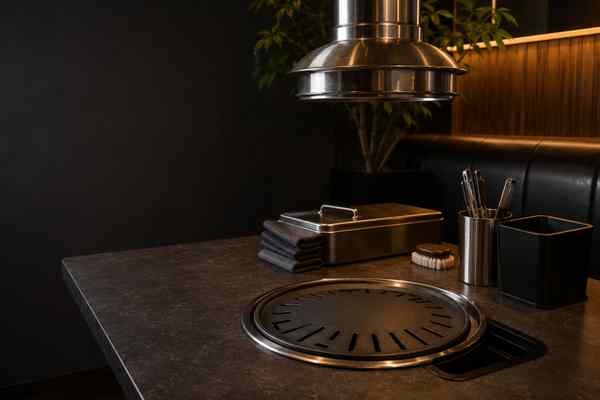
Checkpoint 1
Prepare the room and tools
Clear nearby combustibles and clutter, protect only surfaces the appliance manual permits, and place raw-contact cleanup supplies away from food and tableware.
- Confirm grease tray placement before preheating.
- Keep paper products and fabrics away from heat.
- Set out a container for raw-contact utensils.
Checkpoint 2
Manage cooking residue safely
Use the manufacturer’s instructions for scraping, draining, or replacing liners. Do not pour water onto hot grease or use an improvised cleaner on an active appliance.
- Reduce batch size if residue is building too quickly.
- Stop and cool the appliance if the manual requires it before service.
- Keep clean utensils separate during any mid-service reset.
Checkpoint 3
Ventilate within the safe setting
Continue appropriate ventilation for normal residual odor only as the appliance and building systems allow. Ventilation is not a remedy for using prohibited combustion equipment indoors.
- Keep the approved airflow path unobstructed.
- Do not leave active cooking equipment unattended while airing the room.
- Treat unexpected heavy smoke as a stop-and-assess condition.
Checkpoint 4
Cool, clean, then store
Switch off and unplug or shut down exactly as directed, keep people away from hot surfaces, and wait for the specified cooling state before disassembly or movement.
- Dispose of grease according to local and manufacturer guidance.
- Clean food-contact parts with approved methods.
- Dry components fully before reassembly and storage.