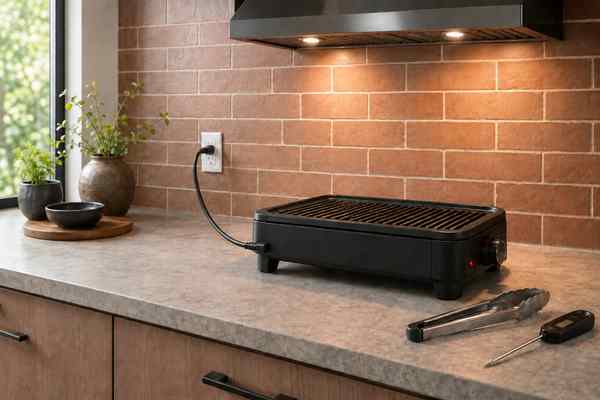
Checkpoint 1
Filter by approval before features
Start with the stated use environment, electrical or fuel requirements, temperature controls, clearances, and cleaning instructions. Size and aesthetics matter only after those constraints pass.
- Verify the model is approved for the intended setting.
- Confirm circuit and outlet requirements without extension-cord improvisation.
- Check that replacement trays or approved cleaning parts are obtainable.
Checkpoint 2
Plan airflow without overclaiming it
Ventilation can help manage normal cooking vapor and odor, but it never makes an outdoor or combustion appliance safe indoors. Follow both the appliance and ventilation-system instructions.
- Use a functioning hood or room ventilation where appropriate.
- Keep required appliance clearances unobstructed.
- Stop use if the manual’s conditions cannot be met.
Checkpoint 3
Choose a workable cooking area
The table needs a stable heat-safe zone for the appliance plus separate landing areas for raw food, clean platters, utensils, and the thermometer.
- Keep cords and hot handles out of guest traffic.
- Place splatter-prone cooking away from walls and fabrics.
- Do not crowd vents, controls, or grease channels.
Checkpoint 4
Test the setup before hosting
Run the approved appliance empty or with a small test batch exactly as its manual directs. Confirm reach, seating, glare, ventilation, circuit stability, and cleanup access before adding guests.
- Calibrate the food thermometer separately.
- Practice transferring food to a clean platter.
- Record any manual-specific restrictions in the event checklist.