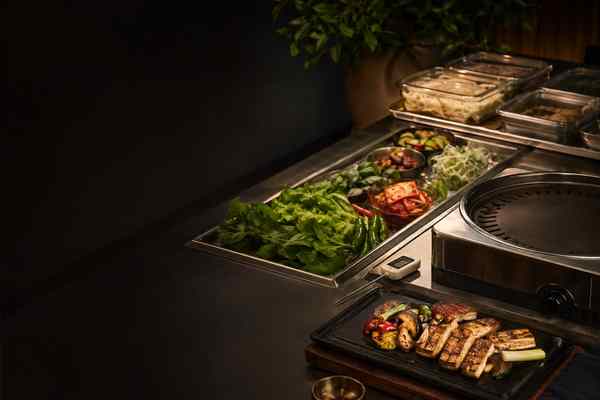
Checkpoint 1
Two days: absorb the uncertainty
Use the first day to confirm labels, equipment, refrigerator space, and make-ahead dishes whose recipes permit it. This runway leaves time to replace a missing ingredient or unsuitable appliance.
- Read every recipe and create the consolidated list.
- Check appliance manuals and thermometer calibration.
- Complete only recipe-approved long-lead preparations.
Checkpoint 2
One day: protect cold storage
Prepare stable banchan and sauces, organize raw ingredients in leak-resistant containers, and reserve clean serving sauce before any raw contact.
- Keep raw food below and away from ready-to-eat items.
- Label containers with dish and service role.
- Wash and dry greens before the raw prep zone opens.
Checkpoint 3
Two hours: stop adding dishes
At this point, shift from ambition to execution. Finish cold dishes, set the clean and raw stations, prepare only recipes whose safe marination and timing windows fit, and preheat at the manufacturer-specified time.
- Chill finished cold food until service.
- Place thermometer, clean platter, and separate tongs at the grill.
- Do not shortcut refrigerator marination with room-temperature holding.
Checkpoint 4
Service: cook, verify, replenish
Cook in manageable batches, transfer with clean utensils, and replenish small platters from protected reserves. Move leftovers into the recipe’s storage process rather than leaving them on the warm table.
- Keep raw and cooked handlers distinct where possible.
- Verify recipe-specific temperature and rest requirements.
- Begin cleanup only after equipment is switched off and safely cooling.