Checkpoint 1
Decide before service
Read each recipe’s storage and leftover sections before cooking. Some fresh, dressed, shellfish, egg, or table-held components may not be good or appropriate candidates for saving.
- Reserve untouched portions before they reach the table when appropriate.
- Keep raw marinade and raw-contact sauces out of the leftover plan.
- Use clean containers sized for the remaining quantity.
Checkpoint 2
Separate incompatible textures
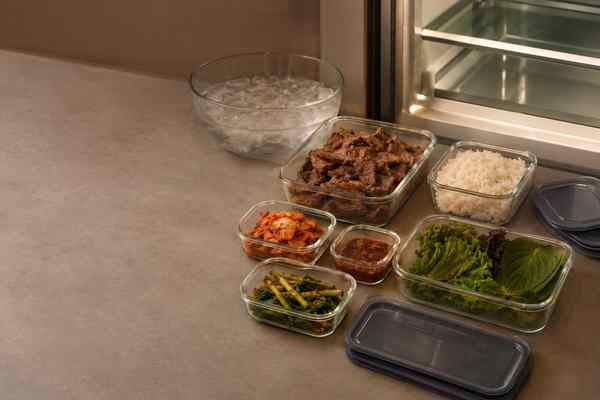
Store grilled food, rice, greens, sauces, and crisp banchan separately when the recipes permit. This preserves identity and lets each item follow its own reheating or no-reheat instruction.
- Do not mix fresh greens into warm leftovers.
- Keep sauce labels and allergen information with the container.
- Avoid combining batches made on different days.
Checkpoint 3
Cool and label promptly
Follow the recipe’s cooling, container, and refrigeration guidance. A household label should identify the dish and preparation date without pretending to establish a universal safety deadline.
- Use shallow containers where rapid cooling is directed.
- Keep refrigerator airflow and raw-food separation intact.
- Discard food that was mishandled rather than trying to rescue it.
Checkpoint 4
Reheat only as directed
Use the recipe’s reheating method and sensory cues; some dishes should be served cold, refreshed, or not stored at all. Reheating does not erase unsafe holding or cross-contact.
- Reheat only the portion you plan to use.
- Use a clean utensil and serving dish.
- When handling history is uncertain, discard the food.