DraftSF04 · classic
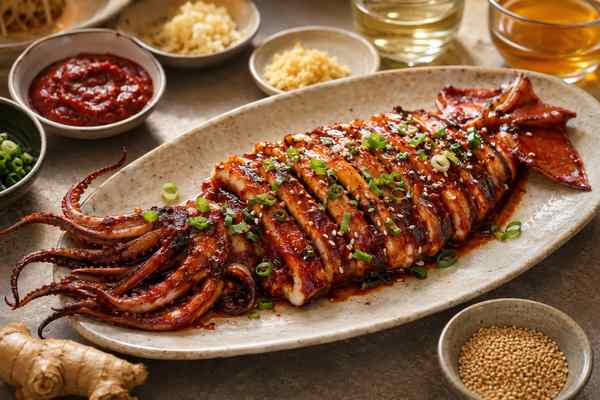
Ojingeo Gui Spicy Grilled Squid
Whole squid is cleaned, lightly scored, grilled until opaque and tender, then lacquered with a glossy gochujang, garlic, ginger, and rice-syrup sauce.
Seafood · Draft SF05
낙지구이 · nakji-gui
Small octopus is coated in a spicy gochujang-garlic seasoning and grilled quickly in a perforated pan until lightly charred and opaque.
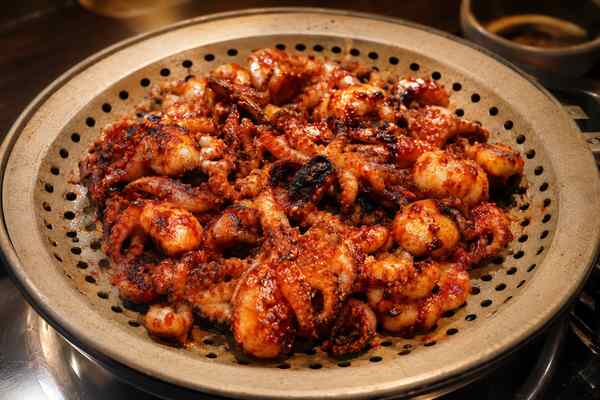
Nakji is commonly translated as long-arm octopus. Korean nakji dishes include stir-fried, raw, and grilled preparations; this locked grilled version is an editorial adaptation requiring species and naming review.
Use time, temperature, and sensory cues together
Inspect refrigerated or properly thawed octopus; reject damaged packaging or any sour, rancid, fishy, or ammonia odor.
Time: Overnight thawing if frozenTemperature: At or below 40°F / 4°C
Look and feel: Octopus smells mild and is cold, with intact flesh.
Safety: Reject sour, rancid, fishy, or ammonia odors and damaged or temperature-abused packages.
Follow the seller’s cleaning state and package directions; remove any remaining beak and internal material if qualified to do so, rinse briefly only as needed, and dry thoroughly.
Time: 10 to 15 minutesTemperature: Cold preparation
Look and feel: The required cleaning is complete and surfaces are dry.
Safety: Keep raw seafood and its juices off ready-to-eat foods; wash hands and sanitize tools afterward.
Combine the spicy seasoning, coat the octopus lightly, cover, and refrigerate for 20 minutes.
Time: 20 minutesTemperature: Refrigerated
Look and feel: A thin coating covers the octopus without pooling.
Safety: Keep seafood refrigerated until the grill is ready.
Preheat a perforated grill pan or fine-mesh basket over medium-high heat and oil it lightly.
Time: 10 minutesTemperature: Medium-high heat
Look and feel: The surface is hot, clean, and lightly oiled.
Safety: Never use a fuel-burning grill indoors; follow appliance ventilation instructions.
Drain heavy excess seasoning, spread in one layer, and grill quickly while turning until opaque, firm, lightly charred, and 145°F / 63°C in representative thick portions.
Time: 8 minutesTemperature: Medium-high heat
Look and feel: Flesh is opaque and firm, suckers are lightly charred, and representative thick portions reach 145°F / 63°C.
Safety: Use a clean thermometer and clean tools after the final turn; verify 145°F / 63°C in the thickest edible portion.
Move to a clean platter, cut with clean tools if needed, and serve promptly.
Time: 2 minutesTemperature: Hot
Look and feel: The seafood is on a clean platter and served promptly.
Safety: Cephalopods can be chewy and pose a choking risk; cut into manageable pieces for the diner.
Species-aware preparation
Thaw overnight in a covered container in the refrigerator. For rapid thawing, seal in a leakproof bag under cold water and cook immediately; never thaw on the counter.
Confirm whether the head cavity, beak, and internal material were removed; follow package or fishmonger directions and do not improvise unfamiliar live-animal processing.
Dry thoroughly, use a thin oil film, and turn only after the surface releases.
8 minutes, subject to product size and grill output; thermometer verification controls.
Storage, sourcing, and substitutions
Contains octopus plus soy, wheat/gluten, and sesame; U.S. molluscan-shellfish classification and exact label handling require qualified review.
Make ahead: Mix seasoning up to 2 days ahead; clean and season seafood only within the stated refrigerated window.
Storage: Refrigerate cooked seafood in a shallow covered container within 2 hours and use within 3 days pending food-safety approval.
Reheating: Reheat only the needed portion to 165°F / 74°C until steaming; avoid repeated reheating.
Leftovers: Use properly refrigerated leftovers within the approved window; discard table-exposed portions after unsafe holding.
Questions this draft anticipates
It keeps small tentacles from falling through while allowing surface browning.
Octopus classification and labeling language must be confirmed for the intended jurisdiction.
Video production plan
The manifest reserves 16:9 and 9:16 shot lists, a poster frame, captions, and a transcript. No video player, duration, upload date, or VideoObject is emitted until an approved asset exists.
Continue the table
These links come from immutable recipe IDs in the relationship graph, not free-text URL construction.
DraftSF04 · classic
Whole squid is cleaned, lightly scored, grilled until opaque and tender, then lacquered with a glossy gochujang, garlic, ginger, and rice-syrup sauce.
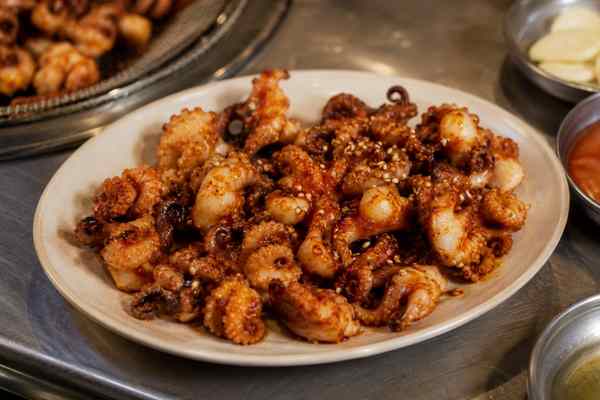
DraftSF06 · contemporary
Baby octopus is lightly coated with gochujang, gochugaru, garlic, and sesame, then grilled quickly in a fine-mesh basket.