DraftSF02 · contemporary
Soy-Garlic Grilled Shrimp
Large shrimp in a quick soy-garlic, honey, rice-vinegar, ginger, scallion, and sesame marinade, grilled until pearly and opaque.
Seafood · Draft SF03
된장 버터 가리비구이 · doenjang-beoteo-garibi-gui
Dry-packed sea scallops grilled for a browned crust and finished with a savory doenjang-butter glaze balanced with honey, vinegar, garlic, and sesame.
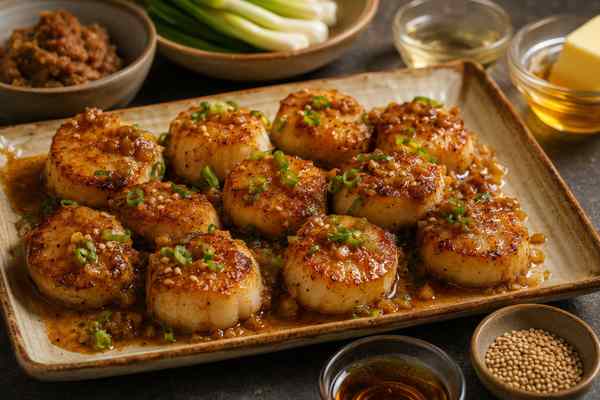
Doenjang is a foundational Korean fermented soybean paste, while butter-based seafood glazes are a modern pairing. This recipe is explicitly contemporary and does not claim that doenjang-butter scallops are a codified traditional dish.
Use time, temperature, and sensory cues together
Thaw frozen scallops overnight in the refrigerator. Remove the small firm side muscle if present. Do not rinse.
Time: 8 minutes after thawingTemperature: 40°F / 4°C or below
Look and feel: Scallops smell mild and sweet, feel firm, and are not sitting in milky liquid.
Safety: Reject scallops with sour, strongly fishy, or ammonia-like odor; sanitize the prep area after raw seafood.
Blot scallops on all sides with disposable towels, then coat lightly with neutral oil and black pepper.
Time: 5 minutes
Look and feel: Surfaces feel tacky-dry rather than wet and leave no puddle on the plate.
Safety: Discard towels immediately and wash hands after handling raw scallops.
Mash butter and doenjang smooth; mix in honey, vinegar, garlic, sesame oil, and scallion. Divide into separate cooking and finishing bowls with separate brushes.
Time: 5 minutes
Look and feel: Glaze is uniform, soft, and brushable with no lumps of plain butter.
Safety: Keep the finishing bowl and brush outside the raw-seafood zone.
Preheat the approved grill or plancha to medium-high, clean thoroughly, and oil lightly.
Time: 10 minutesTemperature: 400–425°F / 204–218°C surface
Look and feel: Scallops sizzle on contact and remain stationary without flooding the surface.
Safety: Use only approved indoor electric equipment indoors; follow ventilation, clearance, and grease instructions.
Place scallops with space between them and cook without moving for 2 to 3 minutes. Turn with a clean thin spatula when they release, brush the cooked side with the cooking glaze, and cook 2 to 3 minutes more.
Time: 4 to 6 minutesTemperature: Official cue: milky white or opaque and firm
Look and feel: First side is browned; center changes from translucent to opaque and the scallop feels firm with slight spring.
Safety: Do not force stuck scallops; inspect the thickest center and discard the cooking glaze and brush after use.
Transfer opaque scallops to the clean platter and apply a very thin layer of untouched finishing glaze.
Time: 1 minute
Look and feel: Scallops are browned, opaque, and lightly glossy without a pool of melted butter.
Safety: Never combine cooking and finishing glaze or reuse raw-contact tools.
Raw-contact boundary
About 150 ml / 2/3 cup glaze
Finishes 680 g / 1.5 lb sea scallops
No marination; keep scallops and glaze refrigerated separately until preheating begins
Divide the glaze into separate cooking and finishing bowls before raw seafood handling.
Discard any cooking glaze or brush contaminated by raw or undercooked scallops; finish only with the untouched clean portion.
Species-aware preparation
Thaw in a covered container overnight in the refrigerator. If using sealed cold-water thawing, cook immediately afterward.
Remove the small tough side muscle when present. Do not rinse raw scallops.
Choose dry-packed scallops, dry aggressively, oil lightly, leave space, and do not move until a crust forms and releases.
About 4 to 6 minutes total for large sea scallops, depending on thickness and surface heat.
For shucked sea scallops no shell-opening cue applies; reject damaged packaging or scallops with spoilage odors.
Storage, sourcing, and substitutions
Check every packaged-ingredient label and prevent cross-contact; substitutions do not guarantee an allergen-free result.
Make ahead: Mix and divide the glaze up to 1 day ahead and refrigerate. Bring it only to a brushable consistency while the grill preheats. Dry and season scallops immediately before cooking.
Storage: Refrigerate cooked scallops within 2 hours at 40°F / 4°C or below and use within 2 days. Discard used cooking glaze and individual serving portions.
Reheating: Reheat leftovers to 165°F / 74°C using brief gentle heat; scallops toughen quickly, so reheat only once.
Leftovers: Slice reheated scallops over rice with fresh greens; do not reuse leftover table glaze unless it remained uncontaminated and continuously refrigerated.
Questions this draft anticipates
They generally release less added liquid, making a browned crust easier. Regardless of type, blot scallops thoroughly and verify freshness.
FoodSafety.gov instructs cooking scallops until the flesh is milky white or opaque and firm; check the thickest center.
Video production plan
The manifest reserves 16:9 and 9:16 shot lists, a poster frame, captions, and a transcript. No video player, duration, upload date, or VideoObject is emitted until an approved asset exists.
Continue the table
These links come from immutable recipe IDs in the relationship graph, not free-text URL construction.
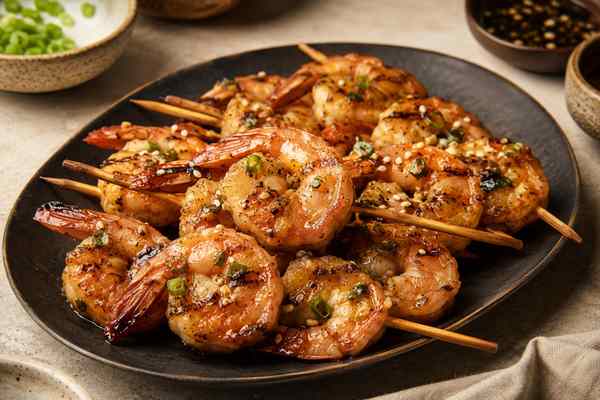
DraftSF02 · contemporary
Large shrimp in a quick soy-garlic, honey, rice-vinegar, ginger, scallion, and sesame marinade, grilled until pearly and opaque.
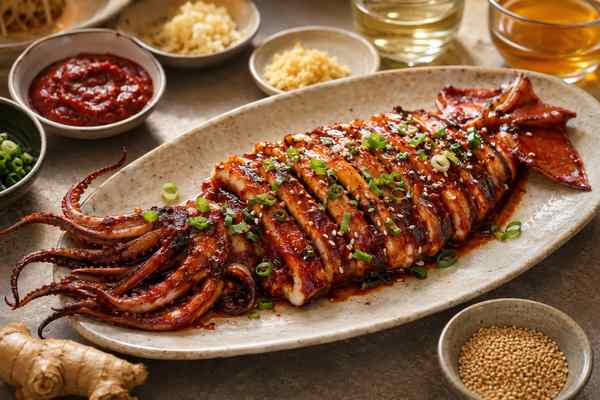
DraftSF04 · classic
Whole squid is cleaned, lightly scored, grilled until opaque and tender, then lacquered with a glossy gochujang, garlic, ginger, and rice-syrup sauce.