DraftM03 · regional
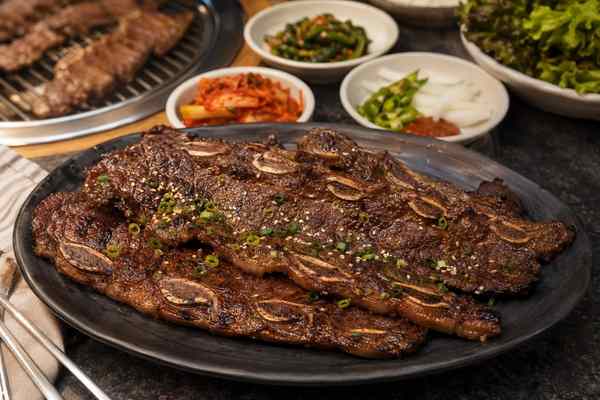
LA-Style Galbi
Flanken-cut beef short ribs marinated with Korean pear, soy, onion, garlic, and sesame, then grilled quickly across their thin cut.
Grilled Meat · Draft M04
고추장 갈비 · gochujang-galbi
A contemporary spicy galbi with flanken-cut beef ribs coated in gochujang, Korean pear, gochugaru, garlic, and sesame.
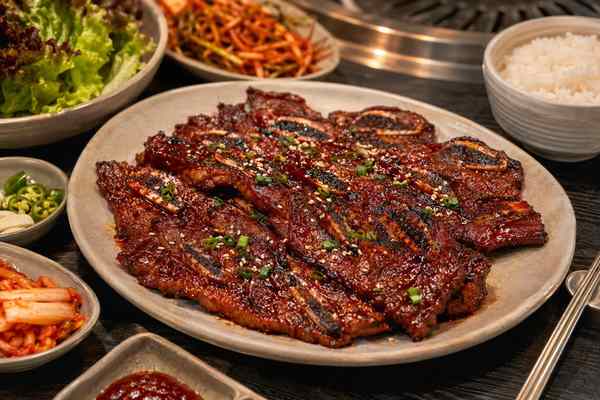
Soy-forward sweet-savory marinades are a familiar baseline for beef galbi. This gochujang-heavy version is explicitly a contemporary spicy adaptation developed for the locked inventory title, not a claim about a single traditional standard.
Use time, temperature, and sensory cues together
Keep ribs cold, inspect the saw-cut surfaces, and remove visible loose bone fragments with a clean damp disposable towel. Do not rinse.
Time: 10 minutesTemperature: 40°F / 4°C or below
Look and feel: Rib strips are evenly thin and free of visible loose bone chips.
Safety: Sanitize surfaces after handling raw ribs; rinsing can spread contamination.
Whisk gochujang, soy sauce, rice syrup, gochugaru, and vinegar until smooth; stir in pear, garlic, ginger, and sesame oil.
Time: 8 minutes
Look and feel: The sauce is smooth, brick-red, and spoonable without dry chile clumps.
Safety: Reserve finishing glaze now, before adding raw beef.
Coat ribs on both sides, cover, and refrigerate for 2 to 8 hours, turning once.
Time: 2 to 8 hoursTemperature: 40°F / 4°C or below
Look and feel: Each strip has a thin, even red coating rather than a heavy paste layer.
Safety: Do not marinate at room temperature or longer than 12 hours; discard raw-contact marinade.
Preheat the approved grill to medium-high, clean it thoroughly, oil lightly, and let heavy excess marinade drip from the ribs.
Time: 10 minutesTemperature: 400–425°F / 204–218°C grill surface
Look and feel: Ribs sizzle promptly without the coating immediately burning.
Safety: Sugary gochujang can scorch; control heat rather than serving blackened coating as a doneness cue.
Grill in a single layer about 2 to 3 minutes per side, turning more often if hot spots darken the glaze.
Time: 4 to 6 minutes per batchTemperature: 145°F / 63°C, then rest 3 minutes
Look and feel: The glaze is set and caramelized, not charred, and the thickest meat reaches target temperature.
Safety: Measure between bones without touching bone; transfer with clean utensils to a clean platter.
Rest at least 3 minutes. If desired, brush lightly with a clean reserved glaze warmed separately; never use raw-contact marinade.
Time: 3 minutes
Look and feel: The glaze remains glossy and red-brown, with the meat moist beneath it.
Safety: Identify bones clearly for diners, especially children.
Raw-contact boundary
About 500 ml / 2 cups
1.2 kg / 2.6 lb flanken-cut beef short ribs
2 to 8 hours at 40°F / 4°C or below
Reserve any finishing glaze before raw ribs enter the marinade.
Discard all marinade that contacted raw beef; use only the clean reserved portion for finishing.
Storage, sourcing, and substitutions
Check every packaged-ingredient label and prevent cross-contact; substitutions do not guarantee an allergen-free result.
Make ahead: Mix the marinade up to 1 day ahead and refrigerate before raw contact. Marinate ribs 2 to 8 hours and never beyond 12 hours.
Storage: Refrigerate cooked beef within 2 hours in a shallow airtight container at 40°F / 4°C or below; use within 3 days.
Reheating: Reheat leftovers to 165°F / 74°C. Reheat only the portion needed and avoid prolonged cooking that toughens thin beef.
Leftovers: Remove meat from bones, refrigerate promptly, and reheat to 165°F / 74°C. Use in rice bowls with fresh vegetables added after reheating.
Questions this draft anticipates
This is explicitly a contemporary spicy variation. Classic beef galbi is commonly soy-forward, while gochujang and gochugaru define this adaptation.
Drain excess marinade, use medium-high rather than maximum heat, turn around hot spots, and judge safety with a thermometer rather than dark color.
Video production plan
The manifest reserves 16:9 and 9:16 shot lists, a poster frame, captions, and a transcript. No video player, duration, upload date, or VideoObject is emitted until an approved asset exists.
Continue the table
These links come from immutable recipe IDs in the relationship graph, not free-text URL construction.
DraftM03 · regional
Flanken-cut beef short ribs marinated with Korean pear, soy, onion, garlic, and sesame, then grilled quickly across their thin cut.
DraftM05
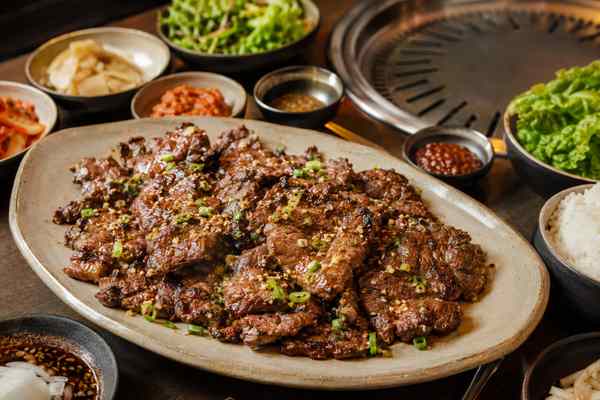
Boneless beef rib meat lightly seasoned with garlic, soy, toasted sesame, scallions, salt, and pepper for fast high-heat grilling.