DraftM20 · contemporary
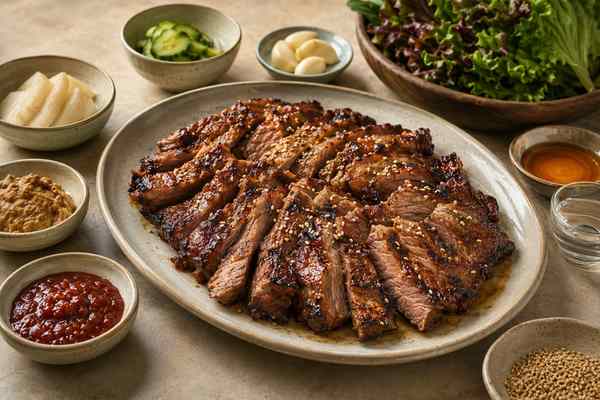
Contemporary Doenjang-Gochujang Lamb Shoulder
Boneless lamb-shoulder steaks are marinated with doenjang, gochujang, pear, and sesame, grilled to 145°F / 63°C, and rested three minutes.
Grilled Meat · Draft M01
불고기 · bulgogi
Thin slices of beef marinated with Korean pear, soy sauce, garlic, scallions, and toasted sesame, then quickly grilled in small batches.
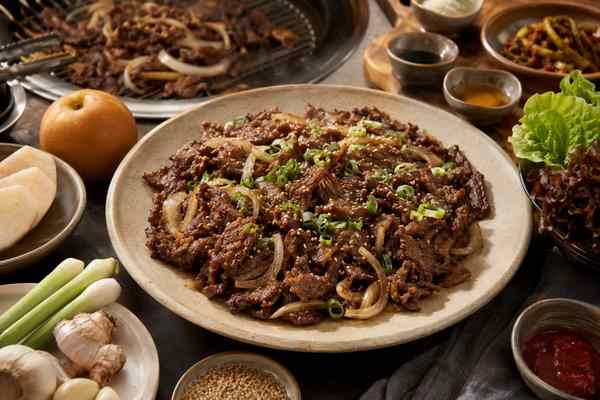
Bulgogi is a broad Korean preparation of thin marinated meat cooked over fire or on a hot surface. Pear is one established marinade option, but sweetness, aromatics, cut, and cooking method vary by cook and household; this draft makes no singular origin claim.
Use time, temperature, and sensory cues together
Firm the beef in the freezer for 20 to 30 minutes, then slice it 3 mm / 1/8 inch thick against the grain. Keep the sliced beef refrigerated while making the marinade.
Time: 15 minutes plus chillingTemperature: Keep at or below 40°F / 4°C
Look and feel: Slices are flexible, evenly thin, and show short cross-sections of the muscle grain.
Safety: Use a clean cutting board; wash hands and sanitize the knife, board, and counter after raw-beef contact.
Whisk soy sauce and brown sugar, then stir in pear, onion, garlic, ginger, scallions, pepper, sesame oil, and sesame seeds.
Time: 5 minutes
Look and feel: The sugar is mostly dissolved and the mixture is loose and evenly speckled.
Safety: Reserve any portion intended for serving before the marinade touches raw beef.
Coat the beef thoroughly, cover, and refrigerate for 2 to 12 hours. Turn the bag or stir once midway if practical.
Time: 2 to 12 hoursTemperature: 40°F / 4°C or below
Look and feel: Every slice is lightly coated without dry pockets.
Safety: Never marinate at room temperature; discard raw-contact marinade after the beef is removed.
Preheat the approved grill to medium-high. Clean and lightly oil the grate, then let excess marinade drip from the beef so it sears instead of steams.
Time: 10 minutesTemperature: 400–450°F / 204–232°C grill surface
Look and feel: The surface is hot enough for an immediate active sizzle.
Safety: Use an outdoor grill or manufacturer-approved indoor electric appliance only, with required ventilation and clearances.
Spread the beef in a single layer and grill, turning and separating the slices, until browned and cooked through, about 2 to 4 minutes per batch.
Time: 2 to 4 minutes per batchTemperature: 145°F / 63°C, then rest 3 minutes
Look and feel: Edges are browned, the meat is no longer raw-looking, and the thickest practical cluster reaches the target temperature.
Safety: Use separate clean utensils and platter for cooked beef; time and color alone are not the doneness test.
Transfer the beef to a clean platter and rest for at least 3 minutes before serving with rice, ssam greens, and reviewed banchan.
Time: 3 minutes
Look and feel: Juices settle and the beef remains glossy rather than watery.
Safety: Do not return cooked beef to the raw-meat bowl or pour raw-contact marinade over it.
Raw-contact boundary
About 420 ml / 1 3/4 cups
680 g / 1.5 lb thinly sliced beef
2 to 12 hours at 40°F / 4°C or below
If marinade is wanted as a finishing sauce, portion it into a separate saucepan before adding raw beef.
Discard marinade that contacted raw beef. A separately reserved portion may be served; do not brush used marinade onto cooked meat.
Storage, sourcing, and substitutions
Check every packaged-ingredient label and prevent cross-contact; substitutions do not guarantee an allergen-free result.
Make ahead: Mix the marinade up to 1 day ahead and refrigerate it before raw contact. Slice and marinate the beef 2 to 12 hours before cooking; do not hold the thin beef in pear marinade longer than 24 hours.
Storage: Refrigerate cooked beef within 2 hours in a shallow airtight container at 40°F / 4°C or below; use within 3 days.
Reheating: Reheat leftovers to 165°F / 74°C. Reheat only the portion needed and avoid prolonged cooking that toughens thin beef.
Leftovers: Use leftover beef in a rice bowl or lettuce wrap after reheating to 165°F / 74°C; keep fresh garnishes separate until serving.
Questions this draft anticipates
Yes. Use a manufacturer-approved indoor electric grill or a heavy skillet under effective kitchen ventilation. Do not bring charcoal, propane, butane camping stoves, or outdoor grills indoors.
Brief chilling firms the meat so thin, even slices are easier to cut; it is a slicing technique, not a food-safety kill step.
Video production plan
The manifest reserves 16:9 and 9:16 shot lists, a poster frame, captions, and a transcript. No video player, duration, upload date, or VideoObject is emitted until an approved asset exists.
Continue the table
These links come from immutable recipe IDs in the relationship graph, not free-text URL construction.
DraftM20 · contemporary
Boneless lamb-shoulder steaks are marinated with doenjang, gochujang, pear, and sesame, grilled to 145°F / 63°C, and rested three minutes.
DraftM02 · contemporary
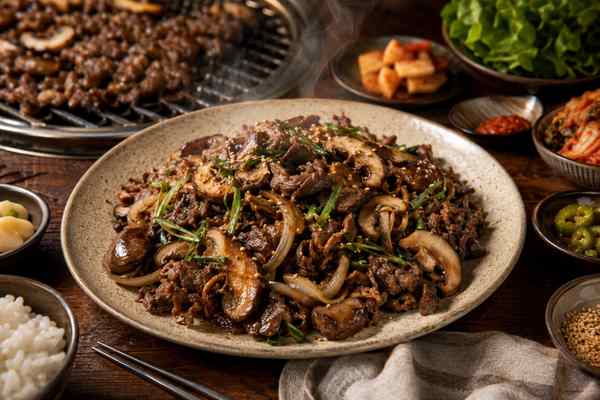
A mushroom-forward beef bulgogi with shiitake and cremini mushrooms in a savory soy, onion, garlic, and sesame marinade.