DraftB19 · classic
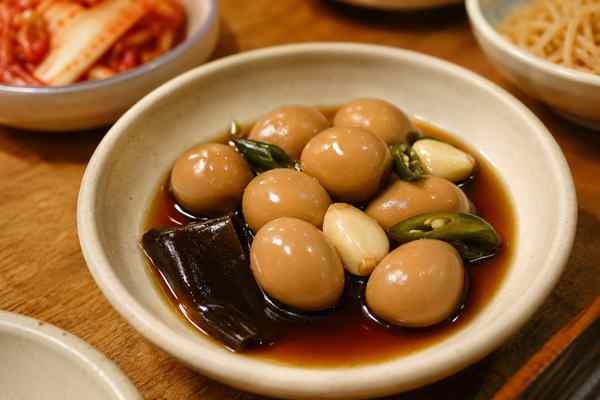
Mechurial Jangjorim Soy-Braised Quail Eggs
Quail eggs are hard-cooked, peeled, and gently braised in soy sauce with garlic until seasoned and glossy.
Banchan · Draft B20
장조림 · jangjorim
Lean beef is simmered until safely cooked and fork-tender, shredded, then reduced gently in a savory soy-garlic braising liquid.
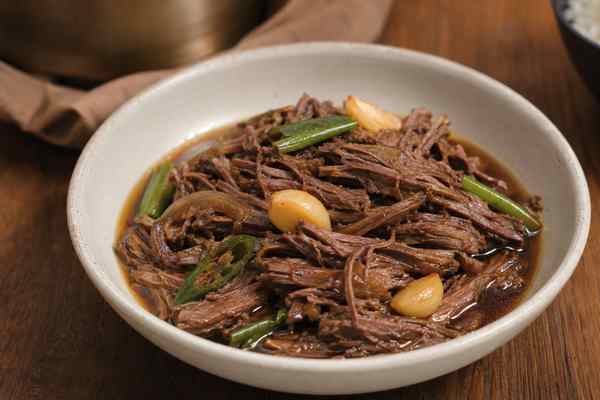
Jangjorim is a Korean soy-braised dish commonly made with beef and sometimes eggs or chiles. Cut, broth, sweetness, shredding, and accompaniments vary.
Use time, temperature, and sensory cues together
Cut beef on a dedicated board, keep it refrigerated, and wash hands and sanitize the work area.
Time: 8 minutesTemperature: Refrigerated
Look and feel: Pieces are even and remain cold.
Safety: Prevent raw-beef juices from contacting ready-to-eat food.
Place beef, water, garlic, scallions, and onion in a pot; bring to a boil, skim foam, then reduce to a covered simmer.
Time: 12 minutesTemperature: Boil then low simmer
Look and feel: Broth simmers gently.
Safety: Open the lid away from your face and use a clean skimming utensil.
Simmer until beef exceeds 145°F / 63°C, completes a 3-minute rest equivalent in the hot covered environment, and continues until fork-tender.
Time: 55 to 70 minutesTemperature: Low simmer
Look and feel: A fork enters easily and the thermometer confirms the safety minimum was exceeded.
Safety: The safety minimum does not by itself establish tenderness; test cooking controls the final texture endpoint.
Move beef to a clean bowl, rest at least 3 minutes, then shred with clean forks; strain 720 ml / 3 cups broth.
Time: 10 minutesTemperature: Warm
Look and feel: Beef shreds into long fibers.
Safety: Use only clean tools and a clean bowl after cooking.
Return shredded beef and measured broth to the clean pot with soy sauce, rice syrup, and optional chiles; simmer until seasoned and reduced.
Time: 15 to 20 minutesTemperature: Gentle simmer
Look and feel: Beef is deeply seasoned and liquid remains for storage.
Safety: Reduced salty liquid is hot; avoid splashing.
Serve hot, or divide beef and liquid into shallow clean containers and refrigerate within 2 hours.
Time: 5 minutesTemperature: Hot or cooling
Look and feel: Beef remains moist in the braising liquid.
Safety: Cool in shallow containers; do not leave the deep pot at room temperature.
Storage, sourcing, and substitutions
Contains soy and wheat/gluten; verify soy sauce labels.
Make ahead: Prepare up to 2 days ahead and refrigerate submerged in braising liquid.
Storage: Refrigerate in shallow covered containers within 2 hours and use within 4 days pending qualified review.
Reheating: Reheat beef in its liquid to 165°F / 74°C until steaming.
Leftovers: Use properly refrigerated leftovers within the approved window.
Questions this draft anticipates
It is the whole-cut beef safety minimum with a rest, but jangjorim requires further simmering until test-cook-verified tender.
The braising liquid helps protect the shredded beef from drying.
Video production plan
The manifest reserves 16:9 and 9:16 shot lists, a poster frame, captions, and a transcript. No video player, duration, upload date, or VideoObject is emitted until an approved asset exists.
Continue the table
These links come from immutable recipe IDs in the relationship graph, not free-text URL construction.
DraftB19 · classic
Quail eggs are hard-cooked, peeled, and gently braised in soy sauce with garlic until seasoned and glossy.

DraftB21 · restaurant-style
Tender potatoes are mashed coarsely with firm-cooked egg, salted cucumber, carrot, apple, and commercial mayonnaise for a creamy Korean restaurant-style side.